

Silent Terror
It happened in slow motion.
Layla, the Beagle we’re fostering, had climbed up on the back of the sofa to get a good view out the window. Honey, my Golden Retriever, was sleeping on the cushions below.
As Layla began to lose her balance, I tried to catch her. I was too slow. She fell, hard, onto Honey.
Honey woke up, startled. Then she watched placidly as Layla bounced off her kidneys.
I’ve seen similar happenings with other dogs. They never end well.
And Honey could have done a lot of damage given Layla’s small size and short coat.
But she didn’t. And I thank Dr. Ian Dunbar.
Any Dog Can Bite
I can hear you now. “Well of course she didn’t bite. Honey is so sweet.” Or, “You know Golden Retrievers. They have that soft mouth.”
But Dr. Dunbar convinced me how important it was to teach bite inhibition when I read his examples of the reactions of dogs who had been awoken, startled, or hurt. The dog who mauled the arm of a woman who had accidentally shut a car door on his tail — was a Golden Retriever.
Any dog can lash out in shock or pain. The idea behind teaching bite inhibition in puppies is so that even if they do snap or make contact with teeth, they won’t break skin.
And it works.
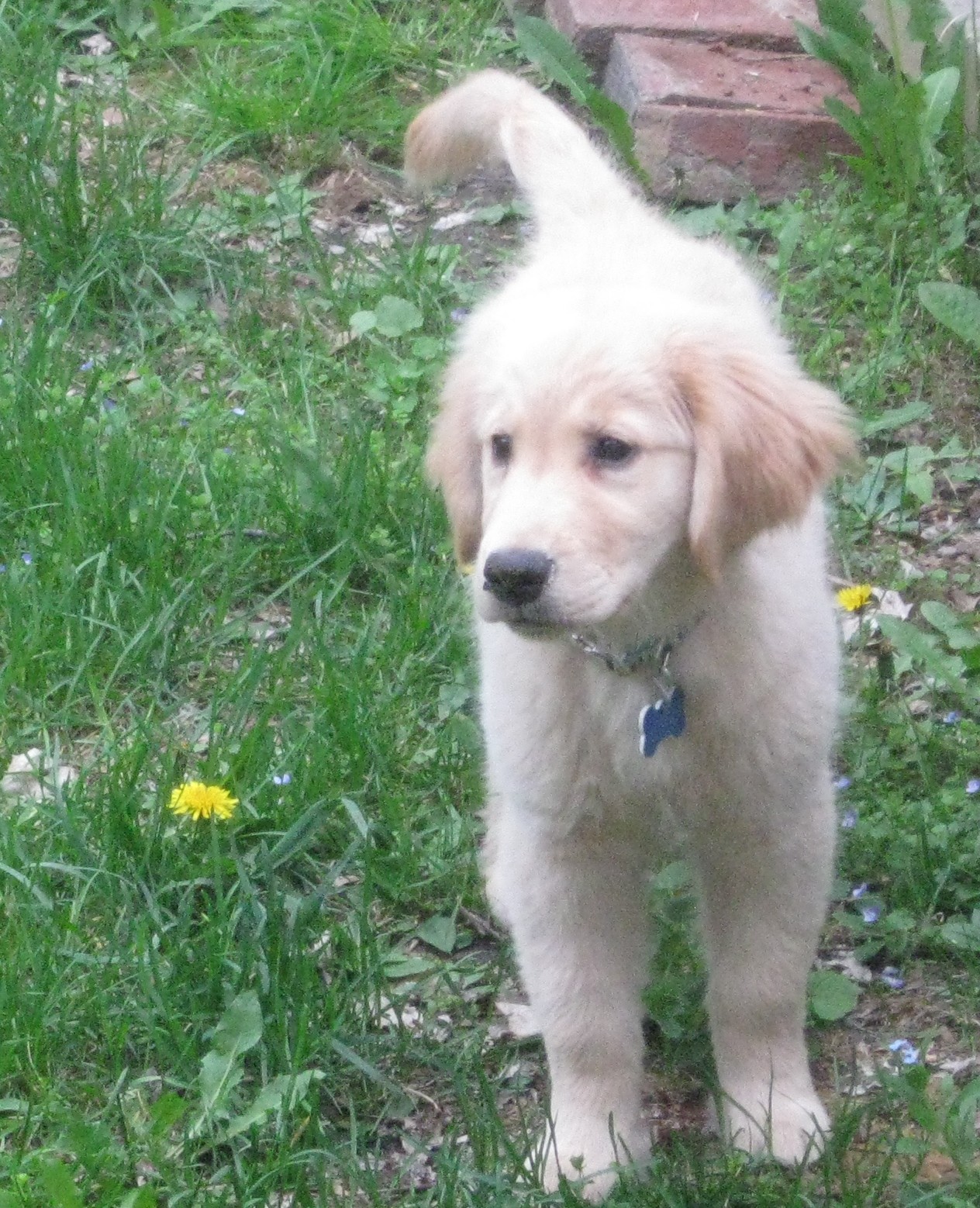
Honey was very rough with her teeth as a puppy. I’ve heard other people with Golden Retrievers say the same thing. They explore with their mouths. And those sharp puppy teeth are terrible.
I spent much of Honey’s early weeks with us in tears. And I wondered if I hadn’t made a big mistake getting a puppy.
How to Teach a Dog Not to Bite
The best teacher is a Mama dog and brother and sister puppies.
Dr. Dunbar’s steps for teaching a puppy to inhibit her bite remind me of what you’d see in a litter.
- Say “ouch” or yelp when a puppy bites too hard. Spend a moment “licking your wounds” before calling the puppy back to you to sit and play some more.
- If puppy continues to bite, leave the room briefly. Return a few moments later to resume play.
- Continue to yelp for the hardest bites as the puppy softens his grip until he makes only gentle contact.
- Finally, teach the puppy to stop mouthing on cue using food or a toy as a distraction.
It worked.
To this day, if my finger ends up in Honey’s mouth during an athletic game of tug, she instantly loosens her grip.
Life Long Learning
I know that when I need to handle Honey’s teeth or jaws I’m safe.
But we still practice her skills. We interrupt every exciting game of tug to make sure Honey knows how to release her grip when we ask her to.
If Honey was ever injured, I’d like to know that anyone who tried to help her would be safe.
I wasn’t thinking of that when she was a bitey little puppy. I just wanted her to stop.
But I’m glad Dr. Dunbar did. Because Honey’s bite inhibition has been a blessing to me.
But it’s an even bigger blessing to the clumsy foster Beagle who can’t stay off the back of the couch.

Note: I recommend Before and After Getting Your Puppy: The Positive Approach to Raising a Happy, Healthy, and Well-Behaved Dog by Dr. Ian Dunbar to anyone thinking of getting a puppy. And check out some of my other favorite dog books.
What would it take to make your dog bite? Have you ever taught bite inhibition to a puppy? How about a grown dog?

 Take 5% off your order and get free priority shipping with coupon code REFER5.